

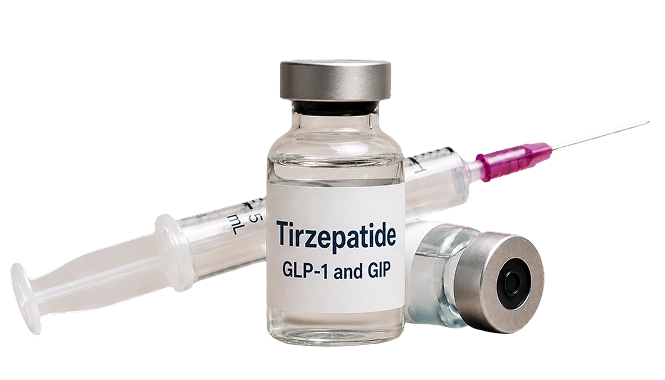
Combination of GLP-1 and GIP
A Dual Incretin Approach to Weight Management and Metabolic Health
GIP RECEPTOR AGONIST
- Enhances insulin secretion
- Improves lipid handling
- Amplifies GLP-1 effects
GLP-1 RECEPTOR AGONIST
- Reduces appetite
- Delays gastric emptying
- Promotes satiety
1,000 + Patients Served
24 /7 Telehealth Access
15 + Treatments Available
98 % Patient Satisfaction
Overview
Tirzepatide is a first-in-class, once-weekly dual glucose-dependent insulinotropic polypeptide (GIP) and glucagon-like peptide-1 (GLP-1) receptor agonist. It represents the most potent pharmacologic option currently available for sustained weight reduction and comprehensive metabolic improvement.
Clinical Rationale
Combination of GLP-1 and GIP exerts therapeutic effects through dual receptor activation:
GLP-1 GLP-1 receptor agonism reduces appetite, delays gastric emptying, and promotes satiety
GIP — GIP receptor agonism enhances insulin secretion, improves lipid handling, and may amplify GLP-1 mediated weight loss
Combined metabolic effects superior glycemic control, substantial fat mass reduction, and cardiometabolic risk factor improvement
FDA-Approved Indications
Obstructive sleep apnea in adults with obesity (moderate-to-severe)
Type 2 diabetes mellitus
Chronic weight management (BMI ≥30, or ≥27 with weight-related comorbidity)
Evidence Summary
Robust phase 3 trial data demonstrate superior weight loss and glycemic control compared to placebo, semaglutide 1 mg, and insulin regimens. Real-world studies confirm clinically meaningful weight reduction even at lower doses, with favorable metabolic effects. The SURPASS-CVOT trial is ongoing to further characterize cardiovascular outcomes.
Clinical Outcomes
- In the SURMOUNT trials, tirzepatide achieved mean weight reductions of 15–21% at 72 weeks, with up to 91% of participants achieving ≥5% weight loss and 50–60% achieving ≥15% weight loss.
- In SURMOUNT-2 (obesity + T2D), tirzepatide 10 mg and 15 mg achieved 12.8% and 14.7% weight reduction versus 3.2% with placebo.
- Long-term data (SURMOUNT-1 extension to 176 weeks) demonstrate sustained weight loss of 18–20% and markedly reduced progression to type 2 diabetes in prediabetic participants.
Administration
- Subcutaneous injection once weekly
- Dose escalation: 2.5 mg → 5 mg → 7.5 mg → 10 mg → 12.5 mg → 15 mg (increasing by 2.5 mg every 4 weeks as tolerated)
- Maintenance dosing: 5–15 mg weekly based on clinical response and tolerability
- Oral formulations available
Safety Profile
Most common adverse effects are gastrointestinal (nausea, diarrhea, vomiting, constipation), typically mild-to-moderate and transient, occurring primarily during dose escalation.
Contraindicated in pregnancy and personal/family history of medullary thyroid carcinoma or MEN2
Hypoglycemia risk when combined with insulin or sulfonylureas
Acute kidney injury with severe GI events
Gallbladder disease — monitor for symptoms
Pancreatitis — discontinue if suspected
Metabolic Health & Wellness Focus
Weight Management
Glycemic Control
Cardiometabolic Health
Quality of Life
Once-weekly Convenience Sustainable Adherence And Long-term Results
Dual Incretin Advantage GIP + GLP-1 Synergy For Enhanced Efficacy
Improved Metabolic Health Better Glucose Control, Lipids, Blood Pressure And Inflammatory Markers
Superior Weight Loss Up To 21% Mean Weight Reduction At 72 Weeks